
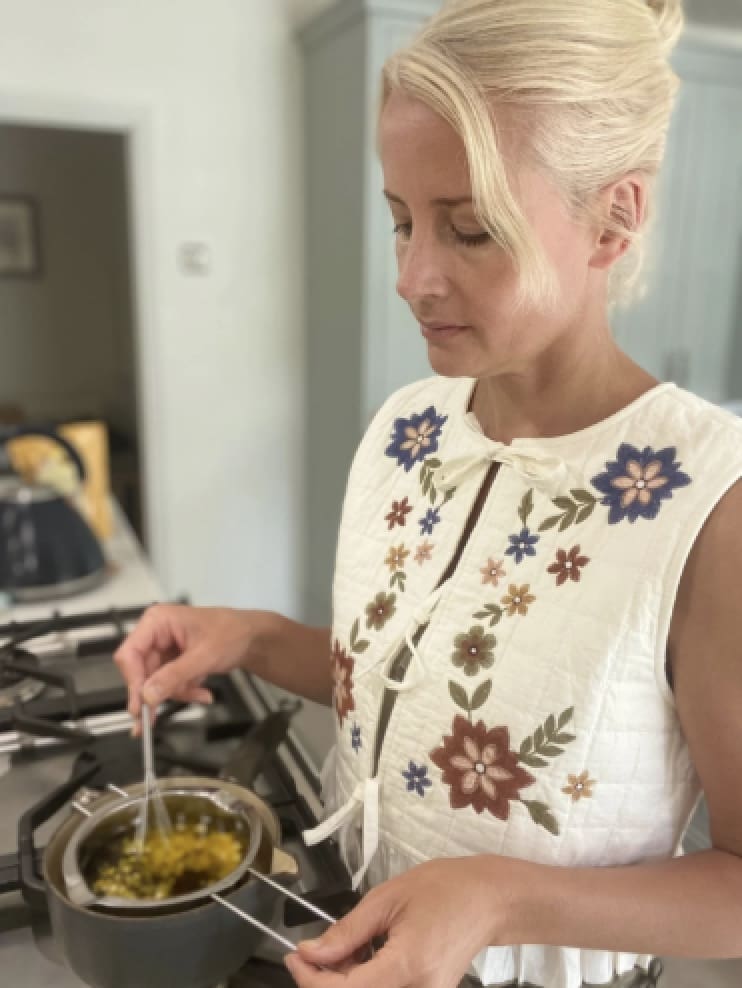
As a Herbal Medicine student at the School of Natural Medicine, students learn how to make their own herbal products so that the medicinal properties of herbs can be applied directly to the skin or integrated into a client’s program in a way that best suits their needs. Here Herbal Medicine student, Charlotte Wyeth, shares her experience with three herbs!
Passionflower
As a Herbal Tea
I have been enjoying Passionflower as a herbal tea- it’s become my go to whenever I’m feeling a little on edge, anxious or overwhelmed and I have been recommending it to friends who are also enjoying its benefits. I find it really promotes relaxation and a sense of calm, and I find it particularly valuable as a peri menopausal woman to help with the inevitable mood swings and irritability.
I have been taking 1 teaspoon of the dried herb per cup of herbal tea and have 1-2 cups as necessary…I find the pleasant earthy, grassy taste instantly comforting & calming!
As a Tincture

I also really wanted to make a Passionflower tincture to make it easier to take on the go when I don’t have time to infuse a pot of tea and also to take just before bed or during the night to help with sleep – I have to avoid drinking fluids too close to bedtime to avoid the inevitable toilet trips that ensue! A tincture form would therefore enable me to take advantage of the sedative, tranquilizing and sleep-inducing properties of the herb which can help with insomnia and disturbed sleep patterns, being useful for short bouts of sleeplessness which I can suffer from occasionally if I am feeling stressed or overly anxious…..
I used a 1/5 ratio of dried herb to a good quality, organic 80-proof (40% alcohol) vodka then sealed & stored in a cool dark place for 5 weeks, shaking a little every couple of days. I then strained using a double layer of muslin and bottled in a dark glass tincture bottle. I love how easy the tincture is to take – I have been taking 20 drops in a little water which has been having a nice calming effect.

Rosehips
As a herbal tea
I wanted to try drinking rosehip tea as I’m lucky enough to have lots of dog roses in the garden and therefore have been able to collect rosehips to use both fresh & dried. I tried using dried rosehips as a herbal tea and left these to infuse for a good 15-20-minutes, but I was very unsatisfied with the result (very little sign of them having infused at all and no taste!).
I then tried breaking them up first using a mortar & pestle to increase the surface area infusing but was still underwhelmed…I have found that the only way to make a lovely rich tasting tea is to make a decoction – bashing the rosehips with the mortar & pestle first or giving them a quick blitz in a blender, then bringing to the boil in a pan of water and reducing the heat to let it simmer for 20 minutes. This produced a lovely rich orangey red colored tea which tasted delicious with a little added honey! Wonderful to drink on a cold winters day as a highly nutritive, soothing & immune boosting tea.
Cold pressed rosehip oil as both a body oil & made into a nourishing beauty balm
I wanted to take advantage of rosehip’s amazing antioxidant & skin regenerating properties so bought some organic cold pressed rosehip oil (rosehips infused into castor oil). I have made this into a body oil (adding essential oils for desired-scent) for skin nourishment – I found this particularly good at rehydrating my thirsty, sun exposed skin towards the end of the summer! I also love the radiant glow it gives to the face when made into a moisturizing balm (along with shea butter & beeswax). The antioxidants and fatty acids in rosehips are beneficial for skin elasticity and moisture making the skin look younger and vibrant and preventing premature aging which is ideal for me as a woman in her mid-40s.

As rosehip syrup
I wanted to try making rosehip syrup as an alternative to drinking herbal tea and an easy way of boosting my nutrient intake (especially vitamin C) and improving my general health as well as taking advantage of the antioxidant, anti-inflammatory and immune boosting properties of the herb.

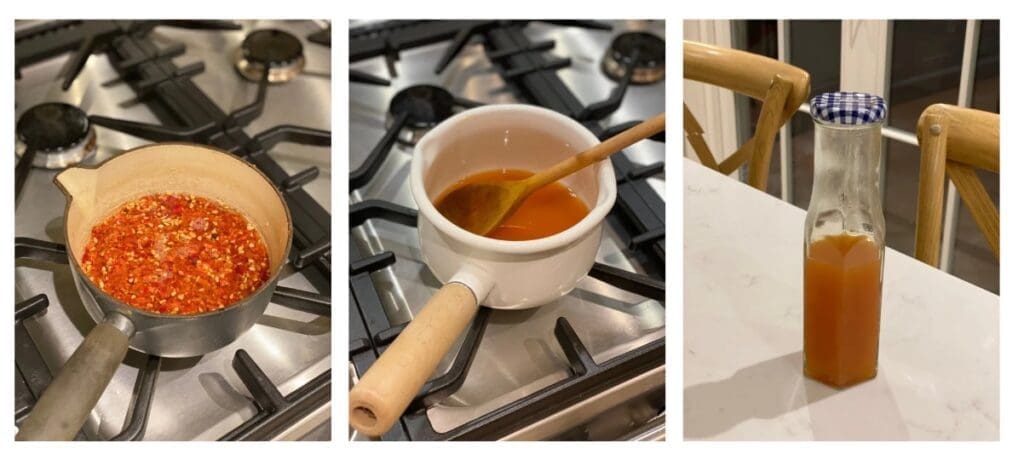
I blitzed freshly picked rosehips in a food processor first, then transferred-them-to-a-saucepan, added water and brought to the boil and then simmered for 30-minutes. I then strained the rosehips, seeds & all the irritant hairs out through a double layer of muslin and added honey as the mixture cooled. I then bottled & refrigerated the syrup.
Rosehip Syrup Recipe
300g rosehips
500 ml water
200g honey
The syrup is absolutely delicious – very fruity and floral and I was surprised by the intensity of the flavor! I very much enjoyed having a tablespoonful a day while it lasted and will have to find more rosehips!
Nettle
Stinging Nettle Balm
Both my mother and my mother-in-law suffer from arthritis so I wanted to try making a balm to help ease muscular & arthritic-pain & inflammation.
I thought nettles would be ideal for this due to their rubefacient & circulation boosting properties (increasing blood flow to the area when applied topically, helping relieve pain from conditions like arthritis, rheumatism, and other musculoskeletal issues).
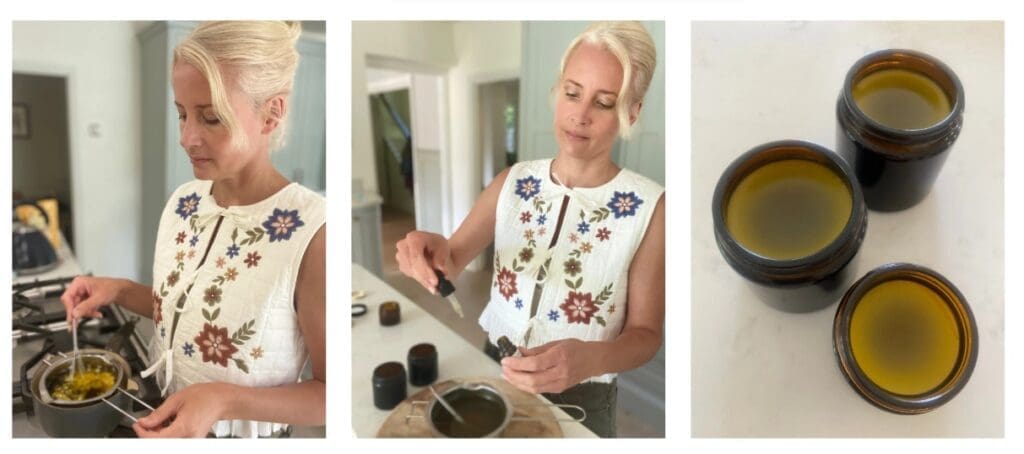
I first of all foraged nettles from my garden (they grow abundantly in our nutrient rich compost-heap!), then dried them out. I prepared a herbal infused oil using my dried nettles (I used sweet almond oil for this) and as this was late summer/early-autumn I was able to leave the jar to infuse on a sunny windowsill for a few weeks. The oil was such a beautiful vibrant bright green color when I came to strain it!
I then combined with coconut oil and beeswax in a double boiler to form a balm. I added peppermint, lavender & frankincense essential oils for their anti-inflammatory & pain-relieving properties.

My Recipe:
190ml nettle infused sweet almond oil
80ml-beeswax
55ml-coconut oil
1% essential oil dilution = 22 drops each of peppermint, lavender & frankincense essential oils
I was able to give jars to a few people and I have had very positive feedback from both my mother & mother-in-law who say it does indeed help to ease arthritic pains in their hands & shoulders!
As a herbal tea – both fresh & dried-leaves
I absolutely love the taste of fresh nettle tea through to late spring and regularly gather fresh nettles to make a pot of nutritious, cleansing & detoxifying tea…I. also make sure to dry lots of nettles to be able to continue to benefit from nettle tea throughout the rest of the year and have continued to drink it as a tea regularly, sometimes combining it with Oat Straw to make a mineral-rich, nourishing blend.

As a soup
I made a delicious, nutritious soup combining fresh nettle leaves with onions, potatoes and carrots and served with a little crème fraiche – I found this the best way to get my kids to eat nettles and give them a nutrient-boost!
As a snack (nettle seeds)
Nettle seeds can act as a stimulant, boosting mood, focus, and energy so I regularly forage and snack on the seeds for a deliciously zingy energy boost and also dry some to add to my morning bowl of granola.
I hope you enjoy experimenting with these recipes and the benefits that they bring!